
A slot machine that never surprises anyone gets abandoned within minutes. A card game with no moment of doubt feels like paperwork. Somewhere between total predictability and total chaos sits a narrow band where players actually want to stay – and reaching that band is less art than arithmetic, dressed up to look like art.
Game studios spend enormous effort on this balance long before a title ever reaches a lobby. Volatility curves get modeled, near-miss frequencies get tuned, and payout tables go through dozens of revisions before anyone approves a build. Sites that host these titles, including sankra casino, rely on suppliers who treat that tuning as core intellectual property rather than an afterthought – the difference between a game that gets played once and one that gets played for years often comes down to decisions invisible to the person spinning the reels.
What tension actually means in game design
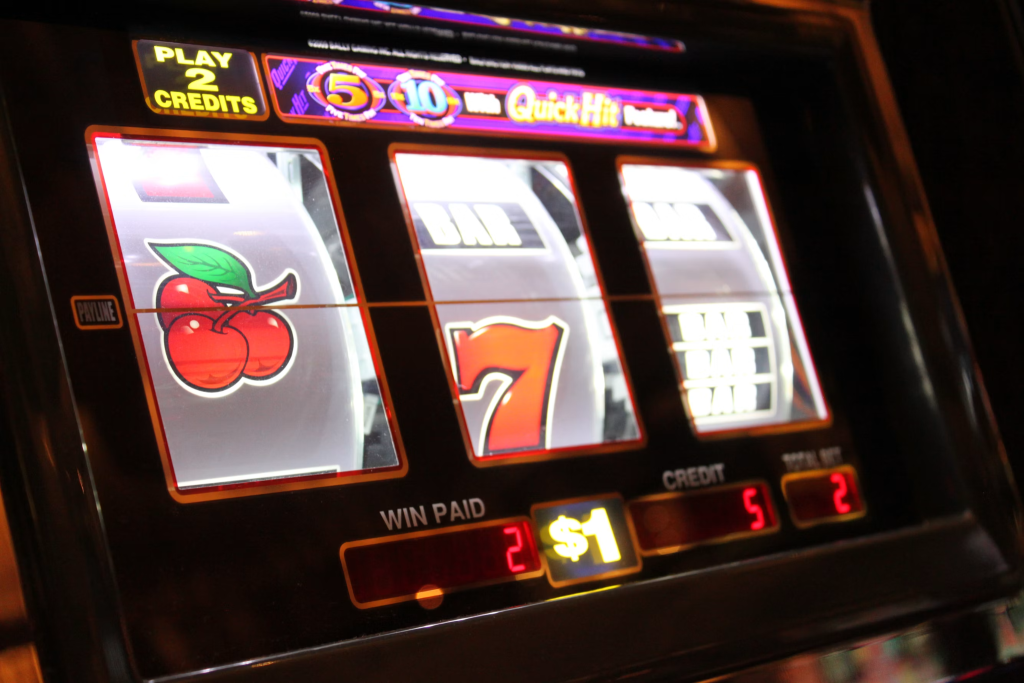
Tension isn’t the same as randomness. A pure coin flip is unpredictable but rarely gripping after the tenth repetition, because nothing about it escalates. Designers instead build sequences where the stakes of an outcome increase even while the odds stay fixed or shift only slightly. Think of a bonus round that requires three matching symbols. The first two land quickly. The third stalls. That stall isn’t an accident – it’s a deliberately engineered pause where the visible probability the player perceives diverges from the mathematical probability the system runs. Players feel closer to a win than the numbers justify, and that gap is where tension lives.
Near-misses and their controversial role
Near-miss design is the most studied – and most debated – tool in this space. Regulators in several jurisdictions have scrutinized whether showing a “near win” that pays nothing manipulates perception unfairly. The counterargument from designers is that near-misses simply reflect how reel strips are already weighted; showing them accurately is not manipulation, it’s transparency about outcomes that were always possible. Either way, the data is consistent: sequences with occasional near-misses hold attention longer than sequences that either always confirm a loss instantly or never show partial progress at all.
Escalating stakes without escalating risk
A second technique keeps the underlying risk profile flat while making the presentation of risk feel like it’s climbing. Multipliers that grow visually, countdown timers on bonus features, or animations that slow down at the exact moment a result is about to reveal – these all add perceived tension without changing a single line of the payout math.
How designers actually measure it
Tension resists a single clean metric, so studios triangulate using several proxies at once.
| Metric | What it captures | Typical measurement method |
| Session length | How long tension sustains engagement | Server-side play logs |
| Bet variance over time | Whether players chase or steady out | Round-by-round wager tracking |
| Heart rate / skin response | Physiological arousal during key moments | Lab testing with volunteer players |
| Early exit rate | Where tension fails to hold interest | Funnel analysis on session drop-off |
| Repeat session rate | Whether the experience earns a return visit | Cohort retention over 7/30 days |
Physiological testing sounds clinical, and it is – some studios run small volunteer panels wired with basic biometric sensors during prototype sessions, watching for spikes around bonus triggers. It catches things aggregate data misses, like a feature that retains players while quietly making them anxious rather than excited.
Why this matters beyond entertainment value
The stakes of getting this wrong aren’t purely commercial. Poorly calibrated tension – too much frustration, not enough resolution – pushes some players toward chasing losses, which is precisely the pattern responsible-gambling frameworks try to interrupt. Well-calibrated tension, by contrast, tends to correlate with players stopping sessions voluntarily and returning later, rather than grinding until funds run out. This is part of why regulators increasingly ask suppliers to document their design choices, not just their payout percentages.
Building a tension curve, step by step
Most design teams follow a rough sequence when shaping a new title:
- Map baseline win frequency against a target session length
- Insert two or three “spike” moments where perceived odds diverge from actual odds
- Test variance tolerance with a small player panel before wide release
- Adjust animation timing and sound cues to reinforce – not exaggerate – each spike
- Re-test retention and complaint rates after any adjustment
Skipping steps in that sequence is a common failure mode. A team that nails the math but rushes the animation timing often ends up with a game that feels flat despite sound volatility, because tension is experienced through pacing as much as through the underlying probability table.
Where the discipline is heading
Live-dealer formats and rapid digital tables have pushed measurement further, since tension there compounds across an entire session rather than resetting with each round. Analysts increasingly look at rolling engagement windows instead of single-round snapshots, trying to catch the slow build of a session rather than just its individual spikes. None of this makes the games less about chance. It does mean the experience surrounding that chance is engineered with a precision most players never see.